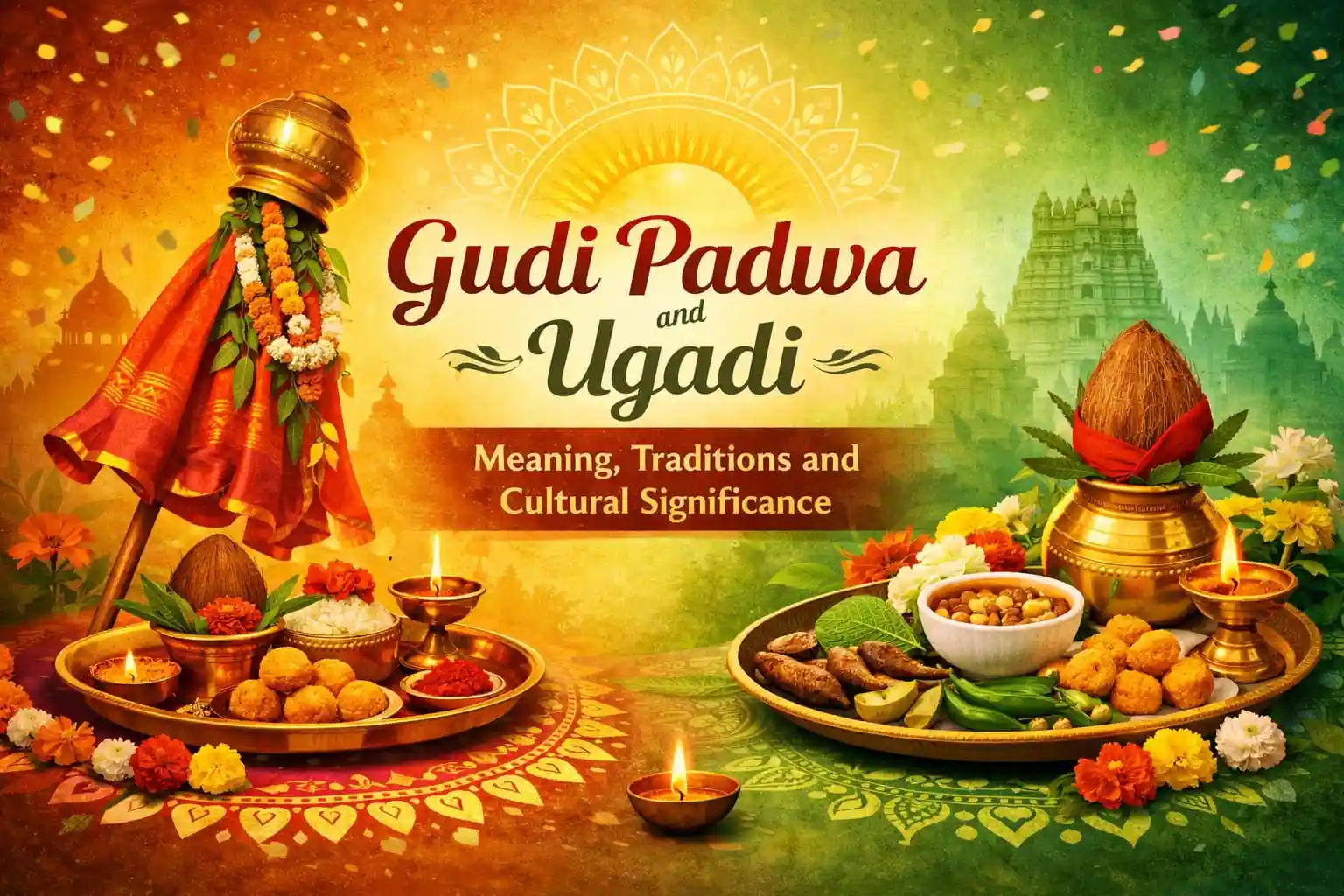
Gudi Padwa is one of the most important traditional festivals celebrated in western India. It marks the beginning of the Hindu New Year according to the lunisolar calendar followed in Maharashtra and the Konkan region. The festival arrives with the beginning of the Chaitra month, which usually falls in March or April and coincides with the arrival of spring.
Across Maharashtra, homes are decorated, special dishes are prepared, and a symbolic flag called the Gudi is raised outside houses. The day is believed to bring prosperity, new beginnings, and positive energy for the year ahead.
Interestingly, the same day is also celebrated in different parts of India under different names. In Karnataka, Andhra Pradesh, and Telangana, the festival is known as Ugadi. Although the traditions vary slightly across regions, both festivals share the same spiritual idea of renewal and the start of a new year.
What is Gudi Padwa?
Gudi Padwa is a traditional Hindu festival that celebrates the beginning of a new year according to the Shalivahana calendar. The word Padwa refers to the first day of the lunar fortnight, while Gudi refers to a ceremonial flag that symbolizes victory and prosperity.
The festival is celebrated on the first day of the bright half of the lunar month of Chaitra. This day is considered highly auspicious in Hindu culture. Many people begin new ventures, purchase property, start businesses, or make important life decisions on this day.
Why Gudi Padwa is Celebrated
Gudi Padwa is celebrated for several historical, cultural, and spiritual reasons. It marks the start of the Hindu New Year in Maharashtra and many parts of western India. Just like the Gregorian calendar begins in January, the Hindu calendar begins with the month of Chaitra.
The festival is also closely connected with the arrival of spring. During this time nature begins to bloom again, crops grow, and the weather becomes pleasant. Because of this seasonal change, the festival represents renewal, growth, and positivity.
Mythological Stories Connected with the Festival
Creation of the Universe
According to Hindu mythology, Lord Brahma created the universe on the first day of the Chaitra month. Because of this belief, the day is considered the beginning of time and cosmic creation.
Victory of King Shalivahana
Another historical belief relates to King Shalivahana. According to tradition, the king defeated invading forces and established a strong kingdom. People celebrated the victory by raising flags outside their homes. Over time, this tradition became the custom of hoisting the Gudi flag.
Connection with Lord Rama
Some traditions also connect the festival with the return of Lord Rama to Ayodhya after defeating Ravana. It is believed that people celebrated the victory by raising flags as a symbol of triumph and happiness.
Cultural Importance in Maharashtra and the Konkan Region
Gudi Padwa holds deep cultural significance in Maharashtra and the Konkan coastal region. It represents not only a religious celebration but also a cultural event that brings families and communities together.
People clean their homes, decorate entrances with rangoli designs, and hang flower garlands and mango leaves on doorways. Families wear new clothes, visit temples, and greet each other with festive enthusiasm.
Meaning of the Gudi Flag and Its Symbolism
The Gudi flag is the most important symbol of the festival. It is made using a bamboo stick decorated with a bright silk cloth, neem leaves, mango leaves, sugar garlands, and an inverted copper or silver pot placed on top.
Each element has symbolic meaning. Neem leaves represent purification and protection from illness. Mango leaves symbolize fertility and good fortune. The silk cloth represents prosperity and celebration.
The inverted pot placed at the top acts like a crown, representing victory and honor. When the Gudi is raised outside homes, it symbolizes success, positivity, and good luck for the coming year.
Rituals Performed During Gudi Padwa Celebrations
The day begins with an early morning oil bath, which is believed to cleanse the body and mind. Homes are decorated with rangoli patterns, flowers, and colorful decorations.
Families then prepare and raise the Gudi flag outside their houses. Special prayers are performed to seek blessings for prosperity and happiness throughout the year.
Many people also visit temples and spend time with family members. The day is considered highly auspicious for starting new ventures and important activities.
Traditional Foods and Their Meaning
Food is an important part of Gudi Padwa celebrations. A special mixture of neem leaves and jaggery is traditionally eaten on this day.
The bitterness of neem and the sweetness of jaggery symbolize the mixture of experiences in life. It reminds people that happiness and challenges are both part of the human journey.
Popular festive dishes include puran poli, shrikhand, and other sweets made with jaggery and lentils. These dishes represent celebration, prosperity, and abundance.
Ugadi: The South Indian New Year
While Gudi Padwa is celebrated in Maharashtra, the same day is celebrated as Ugadi in the southern states of Karnataka, Andhra Pradesh, and Telangana. The word Ugadi comes from the Sanskrit words Yuga meaning age and Adi meaning beginning.
Ugadi therefore means the beginning of a new era or new year. Just like Gudi Padwa, it marks the first day of the Chaitra month and the start of a new cycle in the Hindu calendar.
Ugadi Pachadi and the Symbolism of Life
One of the most important Ugadi traditions is the preparation of Ugadi Pachadi. This special dish contains six ingredients representing different tastes and emotions in life.
These ingredients include neem flowers, jaggery, tamarind, raw mango, chili, and salt. Each taste represents a different life experience such as happiness, sadness, surprise, anger, and excitement.
Eating Ugadi Pachadi reminds people that life contains many different emotions and experiences.
Panchanga Shravanam
Another important Ugadi tradition is Panchanga Shravanam. On this day priests or scholars read the Panchanga, which is the Hindu almanac. The reading includes predictions and guidance for the coming year.
Similarities Between Gudi Padwa and Ugadi
Although celebrated in different regions, Gudi Padwa and Ugadi share the same cultural and spiritual meaning. Both festivals mark the beginning of the Hindu New Year according to the lunisolar calendar.
Both occur on the first day of the Chaitra month and celebrate the arrival of spring. The festivals symbolize renewal, hope, and the start of a fresh cycle of life.
The difference lies mainly in regional traditions. Maharashtra celebrates the festival by raising the Gudi flag, while southern states celebrate with traditions such as Ugadi Pachadi and Panchanga Shravanam.